RASC, Halifax Centre Public Meeting 

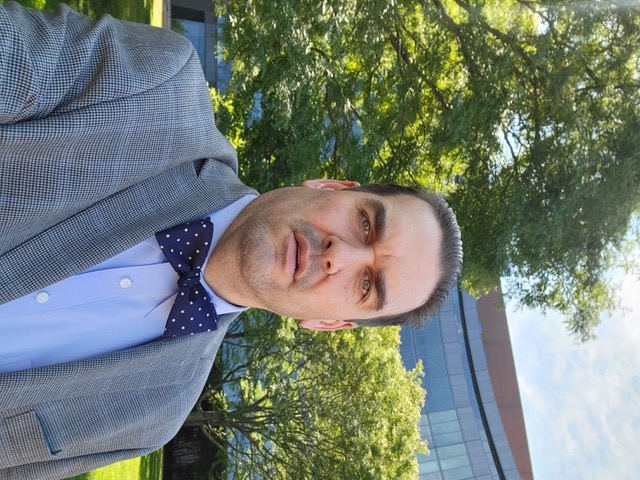
 Devin Williams - "Building Galaxy Outskirts: The Role of Galaxy Mergers and Cosmic Environment"


Meetings of Halifax Centre are from 1:00 PM to 4:30 PM on the FIRST SATURDAY of the month (except July and August). There may be exceptions if the date falls on a holiday weekend. All meetings and special sessions are recorded and are accessible on the RASC Halifax Centre YouTube channel. 

Time: Feb 7th, 1:00 PM Atlantic (12:00 Noon, Eastern)
Place: Room AT101, The Atrium,  Saint Mary's University or by Zoom

We would love to see you at Saint Mary's University. However, if you are a distant member or would prefer not to attend at this time, you can attend via Zoom. If there is a change in location at SMU, we will notify members beforehand.

Register for the Zoom meeting using this link. After registering, you will receive a confirmation email containing information about joining the meeting. 

For those attending in person there will be a free Door Prize  A Celestron PowerSeeker 127EQ manual German equatorial mount

.     


Public Meeting

  • Welcome & Introductions - David Hoskin
  • Photo Montage - David Hoskin
  • Keynote Speaker - Devin Williams.
    Building Galaxy Outskirts: The Role of Galaxy Mergers and Cosmic Environment

    Galaxies do not grow exclusively in isolation. Interactions with neighboring galaxies or dense intergalactic gas can alter a galaxy’s population of stars and overall shape. Understanding how this externally driven evolution varies over cosmic history and across different environments is essential for connecting galaxy evolution to the universe’s large-scale structure. One powerful tracer of environmental influence is a galaxy’s stellar halo—a faint, extended cloud of stars and gas surrounding a galaxy. Models suggest that stellar haloes may grow primarily from stars added through galaxy mergers, and observations studying their buildup across large galaxy populations can reveal how environmental interactions shape galaxy evolution. In this talk, I present results on the evolution of galaxy stellar haloes over ~6 billion years, based on hundreds of thousands of galaxies ranging from the most massive to one-tenth of the Milky Way’s mass. Deep imaging from the CLAUDS survey on CFHT and the HSC-SSP survey on the Subaru Telescope enables the detection of faint stellar halo emission down to less than 0.05% of the night sky’s brightness. I demonstrate how stellar halo growth depends on galaxy mass, cosmic time, and whether a galaxy is actively forming stars, revealing the relative contributions of stars formed inside galaxies versus those acquired from others. I also examine whether galaxy cluster environments—the densest regions in the universe— promote stellar halo growth through more frequent galaxy interactions, or suppress it through harsh environmental conditions.

    Devin J. Williams is a PhD candidate in Astronomy at Saint Mary’s University, working under Dr. Ivana Damjanov and Dr. Marcin Sawicki in the Department of Astronomy & Physics. He earned his MSc in Astronomy in 2023 and his BSc in Astrophysics in 2021, both from SMU. His research uses deep imaging from large-area ground-based surveys to study the physical processes driving galaxy evolution over cosmic time. In addition to his research, he works as a telescope operator and tour guide at the Burke-Gaffney Observatory in Halifax, Canada.

  • Food for the Soul - Paul Heath
  • News from the Board - Tony McGrath
  • Night Sky What's Up? -  David Hoskin
 
Devin Williams
David Hoskin
Tony McGrath
Paul Heath
/